At Tridont Family Dentistry, we tailor our tooth replacement recommendations at Salvaggio Dentistry to suit individual cases. In situations where you have a single missing tooth or contiguous tooth loss, our team may propose a dental bridge. Our carefully crafted bridges not only offer a seamless and authentic appearance but also aid in preventing dental shift and other repercussions linked to an incomplete smile. Feel free to reach out today to explore whether a dental bridge from Tridont Family Dentistry is the optimal remedy for your tooth loss.
What Is A Dental Bridge?
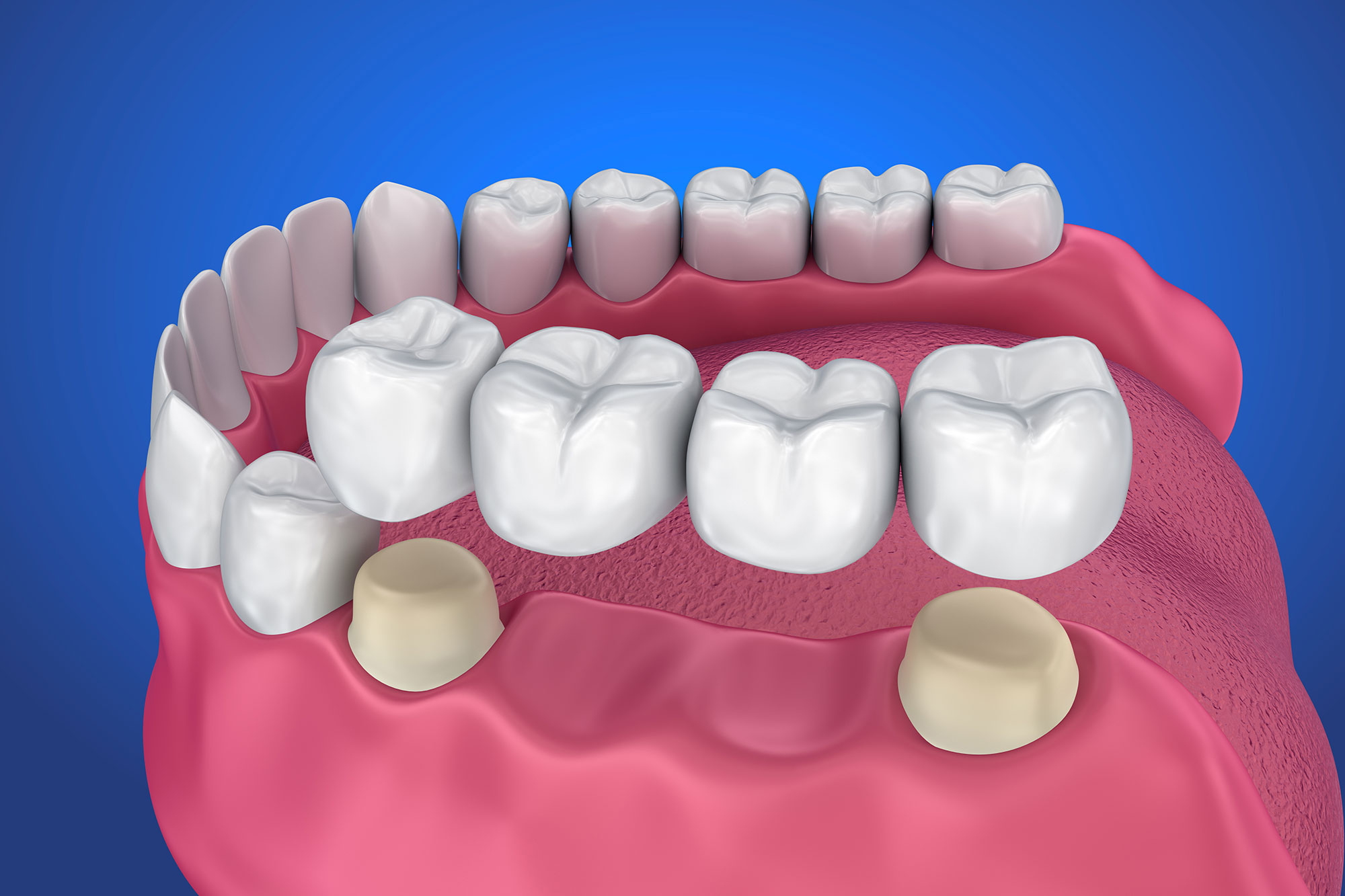
Introducing the Tridont Family Dentistry: At our practice, we understand that crafting a dental bridge requires two essential components: pontics and crowns.
Pontics, those remarkable artificial teeth, play a crucial role in restoring your smile by filling in the gaps left by missing teeth. The number of pontics used in creating your bridge is tailored to the number of teeth you’re missing. For instance, if a single tooth is absent, our skilled team can provide you with a traditional dental bridge featuring a solitary pontic.
Complementing these pontics are crowns, custom-designed caps that mimic the appearance of your natural teeth. In the bridge fabrication process, two crowns are integrated – one situated at each end, cradling the pontic(s) between them. These crowns serve the vital purpose of securing your bridge in place, whether anchored to your natural teeth or expertly affixed to two dental implant posts. Experience the exceptional care and expertise of Tridont Family Dentistry as we create bridges that bring back smiles and confidence.
Types Of Dental Bridges
As we embark on the journey to enhance your smile, it’s imperative to ascertain the optimal dental bridge for your unique needs. Our initial consultation will involve a comprehensive assessment of your oral condition, during which we will expound on your dental requirements. This approach empowers you to make an educated choice pertaining to the most suitable bridge option for you.
TRADITIONAL DENTAL BRIDGE
At Tridont Family Dentistry, we offer traditional dental bridges, which find support from two of your existing teeth. When juxtaposed with implant bridges, the traditional option boasts a swifter placement process devoid of any surgical procedures. This type of bridge proves advantageous for those with one to three missing teeth, ensuring a seamless restoration.
IMPLANT BRIDGE
Among our specialized services, the implant bridge stands out. This bridge type is affixed to dental implant posts, requiring a meticulous placement and restoration process spanning several months. The outcome, however, entails an array of replacement teeth that are not only more robust but also exceptionally stable. Prospective candidates seeking implant bridges are typically individuals with a gap of three or more consecutive missing teeth.
The Benefits Of Getting A Dental Bridge
At Tridont Family Dentistry, we advise promptly addressing missing teeth by considering suitable replacements. Often, a dental bridge is the optimal solution. Following the placement of your dental implant, you’ll experience:
Assurance that your remaining teeth will maintain their correct alignment, ensuring peace of mind.
The ability to enjoy a diverse range of foods, as your bridge restores normal chewing functionality.
A radiant smile, courtesy of seamlessly natural-looking replacement teeth.
A dental prosthesis with a potential lifespan of 15 years or more, contingent on diligent maintenance and care.
A dental bridge is a tooth replacement option used to fill the gap created by one or more missing teeth. It uses an artificial tooth supported by nearby natural teeth or dental implants to restore your smile and chewing function.
Patients with one or more missing teeth may be suitable candidates for a dental bridge. A dentist will evaluate your oral health, surrounding teeth, and overall needs to determine if a bridge is the right solution.
With proper oral hygiene, regular dental checkups, and good care, a dental bridge can provide long-lasting results. The lifespan depends on factors such as materials used, oral habits, and maintenance.
The dental bridge procedure is generally comfortable. Your dentist will use techniques to minimize discomfort during treatment, and most patients adjust quickly after the bridge is placed.
Dental bridges can restore your ability to chew properly, improve your smile appearance, prevent nearby teeth from shifting, and help maintain proper tooth alignment.
Common options include traditional dental bridges and implant-supported bridges. The best type depends on your oral condition, the number of missing teeth, and your treatment goals.
The cost of a dental bridge depends on factors such as the type of bridge, materials selected, number of teeth being replaced, and your individual treatment needs. A dental consultation can help determine the expected cost.